Historic Dublin
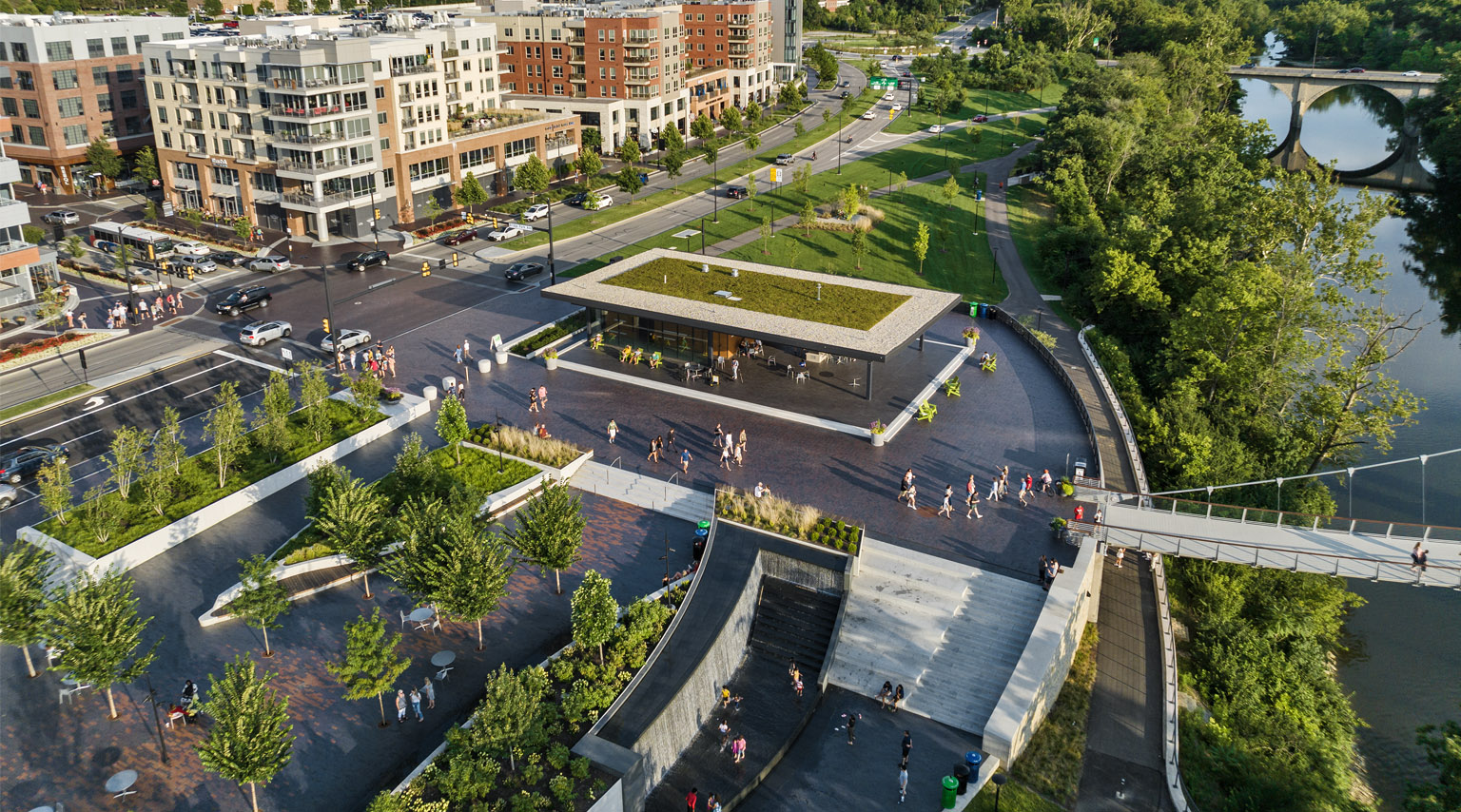
The Historic District of Dublin, Ohio, features centuries-old buildings adjacent to new structures seamlessly blending the old with the new as the backdrop for a vibrant town center with upscale urban amenities. Chic restaurants, eclectic shopping and professional service businesses offer dining, nightlife, shopping and gathering - all within walking distance of a diverse mix of homes and parks along the natural boundaries of the Scioto River.
Construction on New Crosswalk Improvements to Begin in Historic Dublin
Construction will begin on crosswalk improvements in Historic Dublin on Monday, August 22 according to City of Dublin City Engineer Paul Hammersmith.
"The safety of pedestrians and motorists is our number one priority in the Historic District," Hammersmith said. "The crosswalk improvements at North High Street, South High Street and Bridge Street will make the crosswalks more visible to both pedestrians using them and drivers."
Hammersmith said the contractors will begin work on the North High Street crosswalk first. There will be no lane restrictions - but there will be some general construction inconveniences.
The new crosswalk mast arms will feature pedestrian signals and improved lighting for crossing streets. Other enhancements include overhead lights and signs for the crosswalks. Crosswalks will be stamped with street prints, which color the asphalt in the crosswalks to make them more visible to pedestrians and drivers.
The City anticipates the mast arms to be delivered by early October.

Additional improvements include curb "bulbs" that extend the curb into the street, narrowing the road and giving pedestrians a shorter crossing. The curb bulbs will decrease the pedestrian crossing length on North High Street from 42 feet to 25 feet.
BriHi Square Dedication
Thursday, July 7, 2011

Mayor Tim Lecklider speaks to the crowd gathered for the BriHi Square dedication.

Wishing for luck at the BriHi Square dedication.
Parking Demand Study
Click on the map or click here to download a PDF.
As part of a comprehensive Parking Demand Study in Historic Dublin, the City of Dublin is collaborating with Rich & Associates, one of the nation's premier professional parking consultants, to fully assess the parking demand/supply needs in Historic Dublin.
The Parking Demand Study kicked off with a public information meeting on Aug. 10, 2010 at the Dublin Community Church. Download the Presentation
City staff and consultant have conducted a variety of surveys and interviews of property owners, business owners and managers, employees, residents and patrons of Historic Dublin to determine individual parking experiences within the various parking areas in the four quadrants of the District.
Planning provided a memo and presentation to City Council on February 14, 2011, which highlighted the results of the data collection and preliminary recommendations.
Among the variety of data collected and analyzed for this study, the City conducted a three-day comprehensive survey of parking occupancy and turnover throughout Historic Dublin.
Occupancy is a measure of how many parking spaces were occupied during half-hour time periods, as a percentage of available spaces. This slide show illustrates parking occupancy patterns throughout Historic Dublin during one day of observation. District-wide Time Lapse
Turnover is a measure of the length of time individual parking spaces were occupied by the same vehicle. Turnover surveys were conducted for public parking spaces only. These slide shows illustrate parking turnover patterns for the Darby Street and Town Center II parking lots during one day of observation. Darby Time Lapse | TCII Time Lapse.
Based the results of the meeting on March 15, 2011, a final public input meeting was held to review the study process, high light the data, allow attendees the opportunity to comment on the preliminary recomendation. A final report will be completed by the project consultant and a presentation will be made to City Council with final recommendations.
Click here to make a comment and let us know what you think
For more information on the Parking Demand Study or to provide any comments, contact Jennifer Rauch at jrauch@dublin.oh.us or 614-410-4690.
On-roadway placards/bollards in Historic Dublin
City of Dublin Engineering has completed the installation of on-roadway placards/bollards to raise awareness to motorists that pedestrians may be crossing the street and that vehicles must YIELD to pedestrians within the crosswalk.
On-roadway placards/bollards are now located at following crosswalks:
-
N. High Street at North Street
-
S. High Street at Spring Hill
-
SR 161/Bridge Street at Darby Street
-
Darby Street near the Darby Street parking lot
Timeline
January 2011
In-roadway placards were installed
Additional illumination - Supplemental LED light sources
Overhead Signs - converted the overhead signs from reading “Yield to Pedestrians in Crosswalk” to a graphic based message of a yield sign and a pedestrian. This would create greater contrast on the sign face and as a result should be even more visible to motorists approaching the crosswalk.
From the Past to the Present
The charm of Historic Dublin comes from its wealth of historic buildings, many of which are listed on the National Register of Historic Places and the Ohio Historic Inventory. Until the early 1970s Dublin maintained a stable population and land area. Since then, Dublin has been one of the fastest growing communities in Ohio. Unlike those communities, however, Dublin has retained its original historic core in a remarkably intact state.
Historic Dublin is a well-preserved district of homes and businesses, many of which are located in historic structures, that form the core of the city. These structures, along with other historic properties elsewhere in the community contribute to Dublin's sense of character and remind residents and visitors of its long history and vibrant future.
In Historic Dublin, visitors can still experience the environment of a small village with buildings that have been a part of Dublin for well over a century and a half. In the Historic District, it is easy to get a sense of the Dublin’s past and to gain some understand of what village life must have been like during the 19th and early 20th centuries.
For this village character to have survived so well is a credit to those who have worked tirelessly to maintain the historical integrity of the District, a thriving community with residences, businesses, and events that give soul to the heart of Dublin.